
Canada Visitor Visas for Iranians During War and Regional Disruption: Does a Temporary Resident Visa Still Have a Real Chance?
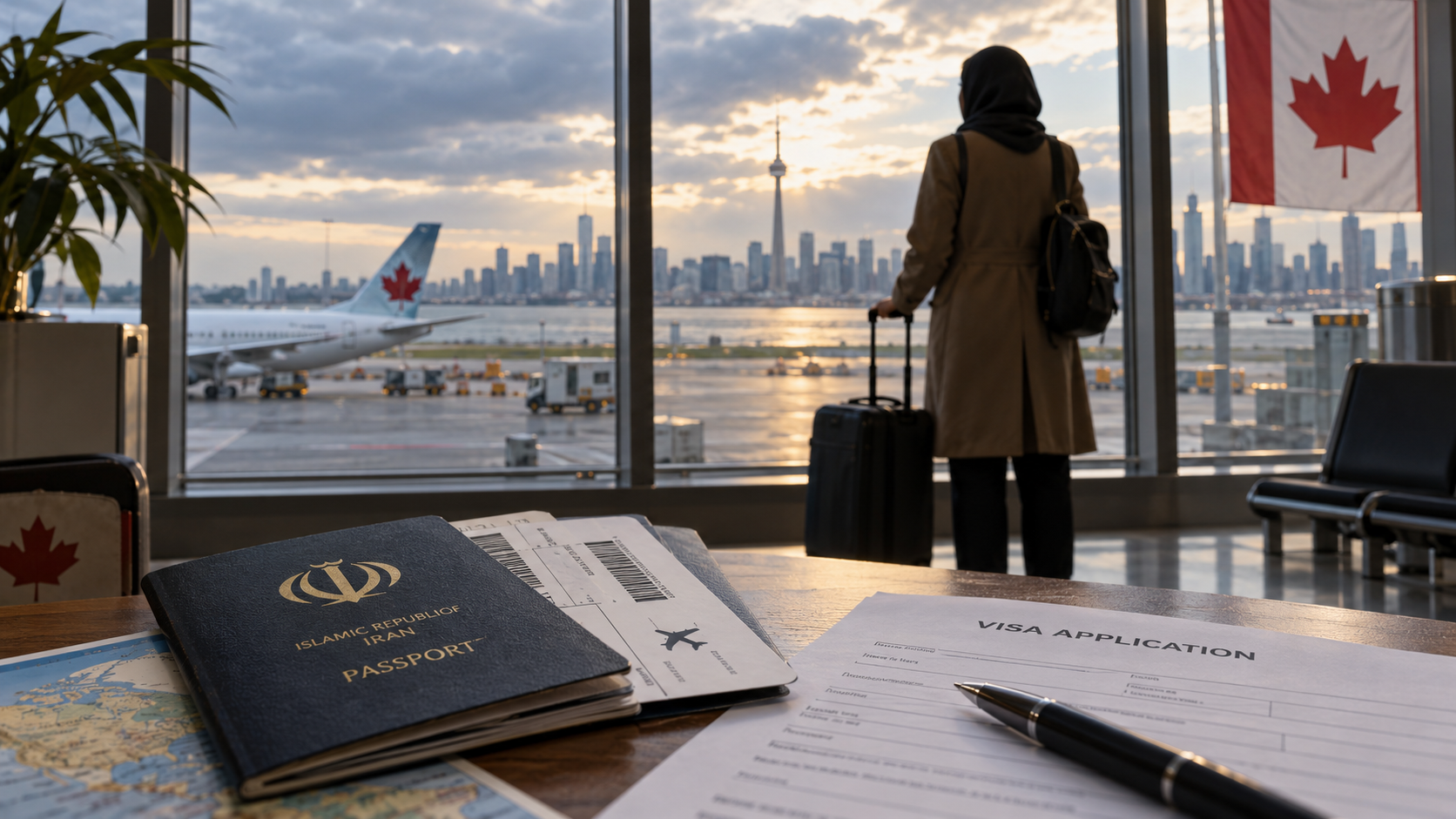
A practical 2026 analysis of Canada visitor visas for Iranian applicants, covering the absence of a Canadian visa application centre in Iran, the need to complete biometrics in third countries, and the real risks tied to finances, travel purpose, temporary intent and wartime logistics.
During periods of war and regional disruption, one of the most common questions among Iranian applicants is whether it is still possible to apply for a Canada visitor visa. The short answer is yes: the legal application pathway remains open. However, for Iranian nationals in the current environment, success depends more than ever on the overall credibility of the file, the logic of the trip, the strength of temporary intent, and the applicant’s ability to complete practical steps outside Iran.
RAVASA executive summary
At present, there is no automatic or guaranteed route to obtaining a Canada visitor visa for Iranian applicants, but the process is not closed. An Iranian applicant may still submit a visitor visa application online, but key parts of the process, including biometrics and in some cases passport submission, must be handled through services outside Iran.
In the current conflict environment, three questions should be answered from the beginning:
- Is the purpose of travel to Canada genuine, clear and defensible?
- Is the applicant’s financial and professional profile strong enough to support temporary intent and return to Iran?
- Can the applicant realistically manage biometrics, passport handling and follow-up through a third country?
The core principle of a Canada visitor visa
According to the official Government of Canada guidance, a visitor visa applicant must satisfy an officer that they:
- have a valid travel document such as a passport;
- are in good health and meet the basic admissibility standards;
- have ties, such as a job, home, financial assets or family, that will take them back to their country of residence;
- will leave Canada at the end of their visit; and
- have enough money for their stay.
For many Iranian applicants in wartime conditions, the most decisive parts of the file are therefore the evidence of ties and the credibility of departure at the end of the visit.
Does war automatically lead to refusal?
No. War, regional crisis or security instability does not automatically result in refusal of a Canada visitor visa. In practice, however, instability may make officers examine temporary intent more carefully.
For a Canadian visitor visa, the key question is not simply whether the applicant comes from a conflict-affected country. The central question is whether the officer is satisfied that the applicant will leave Canada at the end of the authorized stay.
For that reason, during periods of conflict, files supported by stable employment, family responsibilities, financial commitments, travel history and a coherent purpose of visit tend to be structurally stronger than files that rely only on a large bank balance or a weak invitation.
For Iranians, the process is online, but part of it happens outside Iran
Iran does not have a Canada Visa Application Centre. As a result, Iranian applicants generally submit visitor visa applications online and, after receiving a biometric instruction letter, must travel to an authorized centre in another country to provide fingerprints and a photo.
IRCC states that applicants generally have 30 days from the date of the biometric instruction letter to give biometrics. If they cannot do so within that period, they should use the official web form to explain the reason and provide the relevant details.
For Iranian applicants during conflict, this requirement matters greatly because flight disruptions, third-country entry requirements, travel cost and appointment availability can all affect the practical timeline of the case.
Where can biometrics be completed?
IRCC states that biometrics must be given by appointment and that applicants should book as soon as they receive the biometric instruction letter.
Around Iran, the official Canada VAC network currently includes nearby centres such as:
- Türkiye: Ankara and Istanbul
- Armenia: Yerevan
- United Arab Emirates: Abu Dhabi and Dubai
This does not mean that every Iranian applicant can easily use any of these centres. Entry into the third country, obtaining any needed visa, and actual flight access remain separate practical issues. Even so, these centres are among the main nearby options used for Canada biometrics.
Passport handling should be part of the strategy from the beginning
Many applicants focus only on submission and biometrics, but if the case reaches the final stage, passport submission logistics also become important. Since there is no Canada VAC in Iran, the applicant should think in advance about how passport transmission or submission would be handled through a third country.
During wartime conditions, when regional access and flights may change unexpectedly, this part of the process becomes even more important.
Financial evidence: a high balance alone is not enough
One of the most common mistakes in visitor visa applications is to assume that a high account balance by itself creates a strong case. For Canadian visa officers, the financial logic of the file is more important than a raw figure.
If banking activity does not fit the applicant’s occupation, income pattern, lifestyle and stated travel plan, even a relatively good balance may be unconvincing. Large and sudden deposits immediately before filing, without documented explanation, can weaken the case.
In wartime conditions, a coherent and explainable financial profile is often more valuable than a large but artificial bank balance.
The purpose of travel must be real and limited
A visitor visa is for temporary visits: tourism, family visits, visits to friends, or certain short business trips. It is not a long-term residence pathway, not an immigration vehicle, and not a shortcut to remaining in Canada.
If the travel purpose is vague, overly broad or inconsistent with the applicant’s circumstances, the case is weakened. For example, an invitation letter that does not clearly explain the relationship, the purpose of the visit and the accommodation arrangements may not carry much weight on its own.
The more clearly the file shows that the trip is short, planned and temporary, the easier it is for the officer to understand and assess.
Invitation letters help, but they are not enough by themselves
An invitation letter can help explain the purpose of the visit, accommodation arrangements or the relationship with the host. But it does not replace the core requirements of a visitor visa.
Even where the host is a Canadian citizen or permanent resident, the officer still assesses the applicant personally in terms of return incentives, finances, travel history and temporary intent. Weaknesses in the file are not always cured by a strong invitation.
Why travel history matters
A pattern of genuine travel and compliance with previous visas can help an officer better understand the applicant’s behaviour. It does not guarantee approval, but in a real short-stay case it can be a useful positive factor.
By contrast, where there is no meaningful travel history, or where the first major foreign visa request is a Canada application during a time of regional instability, the logic of the file and the quality of the supporting evidence become even more important.
Timing matters more during war
For Iranian applicants, the visitor visa process is not only about the file review itself. Access to biometrics, third-country travel, possible changes to flights, VAC appointment availability and passport logistics can all affect the real timeline.
IRCC also makes it clear that published processing times are estimates, not guarantees. Applicants should therefore avoid treating any online processing indication as a fixed promise, especially where the intended trip depends on a specific date.
In this context, non-refundable tickets, rigid reservations and premature financial commitments can increase the practical risk of the application.
Who tends to have a stronger file in the current environment?
In general, during war and regional instability, an application may be more defensible where the applicant:
- has a short, clear and documented purpose of visit;
- has stable employment or a clearly documented business;
- has real family, assets or responsibilities in Iran;
- has financial activity consistent with their standard of living and declared income;
- if relying on an invitation, can clearly document the relationship and reason for the visit;
- has a history of genuine travel or proper use of previous visas; and
- can realistically manage biometrics and passport logistics through a third country.
Which files tend to carry more risk?
The following issues can increase risk in the present environment:
- a vague or weak purpose of travel;
- excessive reliance on an invitation letter without a strong personal file;
- a high closing balance but illogical banking activity;
- lack of a clear explanation for return;
- inconsistencies between occupation, income and trip cost;
- rushed travel planning without thinking through biometrics and passport logistics; and
- the mistaken belief that wartime conditions themselves make visa approval easier.
Does prior immigration history or a previous Canada visa help?
If an applicant has previously travelled to Canada, the United States, the United Kingdom or the Schengen area and has used those visas properly, that may help the officer understand the applicant’s travel pattern. However, no prior history replaces the need for a strong current file. A visitor visa is always assessed on the present facts, the current documents and the credibility of temporary intent.
RAVASA analysis
In 2026, a Canada visitor visa is not “closed” to Iranians, but a weak file is unlikely to succeed simply because the applicant hopes it will or presents an invitation. In wartime conditions, three pillars matter more than ever:
- the logic of the trip,
- the logic of return,
- and the practical execution of the process.
In other words, the applicant must not only persuade the officer that the trip is temporary and genuine, but also be practically prepared to manage biometrics, follow-up and, if needed, passport handling through a third country.
The right question for today’s applicant is not only, “Is Canada still issuing visitor visas?” The more useful question is:
“Given my travel purpose, background, financial documents and current regional conditions, is my file coherent enough to satisfy a visitor visa officer?”
The answer will differ from case to case.
This analysis is based on official IRCC guidance and the official Canada VAC pages available up to 8 September 2026. Operational conditions, appointment availability and processing conditions may change, so the current official status should always be rechecked before filing or making non-refundable travel commitments.